Common Asphalt Shingle Roof Repairs in Anoka County MN
Asphalt shingle roof repairs in Anoka County typically involve sealing or replacing lifted and missing shingles, fixing nail pops, resealing flashing, and patching localized wind or storm damage. Most repairs are straightforward when caught early. Anoka County's freeze-thaw cycles, high winds, and heavy snow loads accelerate shingle wear, so identifying the specific failure type before any repair work begins is essential. A qualified roofer can complete most common fixes in a single visit, restoring your roof's weatherproofing without requiring a full replacement.
Step 1: Identify the Type of Shingle Damage
Walk the perimeter of your home after any significant weather event and look for granules collecting in gutters or at downspout exits. Granule loss is one of the earliest signs of shingle deterioration in Anoka County homes. From the ground, use binoculars to look for curling tabs, lifted edges, dark patches where shingles are missing, or shingles that appear buckled or out of alignment. Do not attempt to walk the roof slope without proper safety equipment. If you notice any of these signs, contact Roof Repair professionals who can perform a safe, thorough inspection.
Step 2: Seal or Re-Adhere Lifted and Curling Tabs
Wind is the most common cause of lifted shingle tabs in Anoka County, particularly during spring and fall storm seasons when gusts regularly exceed 40 mph. When tabs lift, water can drive underneath and saturate the underlayment, leading to deck rot over time. Repairs involve applying roofing sealant or roofing cement under the lifted tab, pressing it firmly flat, and securing it. In colder months, shingles become brittle and must be warmed carefully before pressing to avoid cracking. Sealant repairs on recently lifted tabs typically extend shingle life by several years when done correctly and promptly.
Step 3: Replace Missing or Severely Damaged Shingles
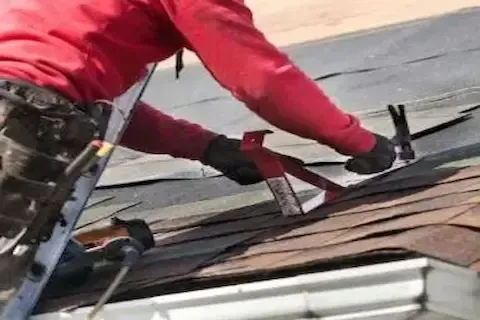
If a shingle has blown off entirely or is cracked through, it must be replaced rather than resealed. A roofer will slide a flat bar under the damaged shingle, remove the nails securing it, and slide out the old piece. A matching replacement shingle is then slid into position, nailed at the correct points, and sealed along the tab edges. Matching shingle color and profile matters in Anoka County neighborhoods where HOAs or municipal codes may require visible consistency. Keeping a small bundle of original shingles in storage after installation makes future spot repairs easier and more accurate.
Step 4: Fix Nail Pops and Exposed Fasteners
Nail pops occur when roofing nails back out of the decking over time due to seasonal wood expansion and contraction. Minnesota's wide temperature swings between January lows and July highs create significant thermal movement in roof decking. When a nail head pushes up through a shingle, it creates a small raised bump that eventually punctures or cracks the shingle surface. The repair involves driving the popped nail back down or removing and replacing it with a slightly longer screw, then covering the fastener with roofing cement and a small shingle patch. Leaving nail pops unaddressed leads to water infiltration directly into the nail hole.
Step 5: Reseal or Replace Flashing at Penetrations and Edges
Flashing failures around chimneys, pipe boots, skylights, and roof-to-wall junctions are a leading cause of interior leaks in Anoka County homes. The sealant around step flashing and pipe boot collars degrades under UV exposure and repeated freeze-thaw stress. Resealing involves cleaning the existing flashing surface, removing deteriorated caulk, and applying new roofing sealant rated for extreme temperature ranges. In cases where flashing itself is corroded, bent, or improperly installed, full flashing replacement is necessary. This is one repair where the source of a leak is frequently misidentified by homeowners, making professional diagnosis important before any material is purchased or applied.
Step 6: Patch Small Wind or Hail-Damaged Areas
Localized storm damage affecting a small section of the roof field can often be repaired by replacing only the impacted shingles rather than triggering a full replacement. After a significant hail event in Anoka County, insurance adjusters typically inspect for bruising, cracking, and granule displacement concentrated in impact zones. A roofer documents the damage, removes affected shingles in the impact area, and installs new shingles in their place. If hail damage covers more than 30 percent of any given slope, full slope or full roof replacement is usually more cost-effective and may be required by your insurer. For a broader understanding of what repair options exist for your specific situation, review available resources before meeting with a contractor.
Step 7: Schedule a Follow-Up Inspection After Repairs
After any shingle repair is completed, a brief follow-up inspection within one season confirms that the repair is holding and that no adjacent damage was missed during the initial assessment. Anoka County's climate means that a repair completed in late summer will face its first real stress test during the November freeze. Ask your roofing contractor whether a follow-up walkthrough is included or available. Keeping a record of each repair with the date, location on the roof, and materials used creates a maintenance history that supports insurance claims, warranty documentation, and future resale disclosures.
