Attic Insulation and Roof Health for Anoka County MN
Most homeowners in Anoka County think about roofing and attic insulation as two separate projects with separate budgets. In reality, they function as a single system. When one side of that system is out of balance, the other pays the price — often in the form of premature shingle failure, ice dam damage, or a sharp rise in energy bills. Understanding how these components interact is the first step toward protecting both your home and your investment.
Why Attic Insulation and Roof Performance Are Linked
Heat moves from conditioned living space upward through your ceiling and into the attic. In a properly insulated attic, that heat transfer is slowed significantly. In an under-insulated attic, heat escapes rapidly into the attic cavity and warms the roof deck. That warmth melts snow on the upper portions of the roof, which then refreezes near the colder eaves — creating ice dams that force water beneath shingles and into the structure below.
The reverse problem is just as real. During Anoka County summers, a poorly insulated attic allows radiant heat from the sun-heated roof deck to move downward into the living space, driving up cooling costs. Adequate insulation buffers both extremes, which is why R-value targets matter year-round, not just in winter.
What R-Value Does Anoka County Require
Anoka County sits in Climate Zone 6 under the Department of Energy's classification system. For attics in this zone, the DOE recommends insulation levels between R-49 and R-60 for most existing homes. New construction is typically held to R-60 minimum under current Minnesota energy code. If your attic is currently at R-30 or below, you are operating with a meaningful gap — both thermally and in terms of roof longevity.
R-value measures resistance to heat flow per inch of insulation material. Blown-in cellulose and blown fiberglass are the most common retrofit options for existing homes because they conform around obstructions and can be added over existing batts without removal. Spray polyurethane foam offers the highest R-value per inch and also air-seals simultaneously, though it requires professional installation and a different budget category.
Vapor Barriers and Moisture Control in Cold Climates
Minnesota winters create a strong vapor drive — warm, moist interior air pushes toward the cold exterior, and the attic sits directly in that path. Without a vapor retarder on the warm side of the insulation, moisture can accumulate in the insulation itself or condense on the underside of the roof deck. Over time, this moisture degrades wood sheathing, promotes mold growth, and shortens the service life of the entire roof assembly.
Vapor control in attic insulation projects is not always straightforward. The correct approach depends on whether the attic is vented or unvented, the type of insulation used, and the existing construction. In most Anoka County vented attic assemblies, a class II vapor retarder on the ceiling plane is appropriate, paired with adequate ventilation above the insulation to allow any incidental moisture to dry outward.
Ventilation: The Third Component in the System
Insulation and vapor control do the work of managing heat and moisture inside the attic space. Ventilation does the work of exhausting that moisture and heat before they accumulate to damaging levels. The standard guideline calls for one square foot of net free ventilation area per 150 square feet of attic floor space, or one per 300 square feet when a vapor retarder is in place.
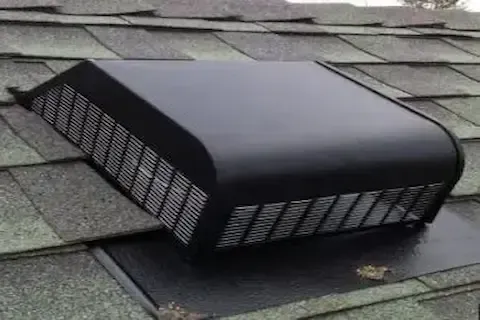
Ridge vents paired with continuous soffit vents are the most efficient configuration because they use natural convection — cool air enters at the soffits, warms as it moves across the attic floor, and exits at the ridge. Gable vents alone or random turbine vents do not provide the same even airflow across the entire deck. In older Blaine and Coon Rapids homes where soffit vents may be blocked by insulation that has been pushed too far toward the eaves, adding baffles during an insulation upgrade restores proper airflow paths.
If you are evaluating your roof system as a whole, Roof Ventilation & Attic Services covers inspection and installation of the ventilation components that work alongside insulation to protect your roof deck.
Common Signs That the System Is Out of Balance
You do not always need a professional inspection to identify a problem. Several signs visible from inside and outside the home suggest the insulation-ventilation system is underperforming:
- Ice dams at the eaves after snowfall, especially when neighboring homes show clean rooflines
- Uneven snow melt patterns on the roof surface — snow melting faster near the ridge than at the eaves
- Frost on the underside of the roof deck, visible during a winter attic inspection
- Higher-than-expected heating or cooling bills relative to similar homes in Ramsey or Anoka
- Shingle granule loss concentrated near the ridge, where heat buildup is highest in summer
- Visible mold or dark staining on attic framing members
Any one of these indicators warrants a closer look at the full attic assembly, not just the visible roofing components.
How Insulation Upgrades Affect Shingle Life
Asphalt shingles carry manufacturer warranties that assume reasonable attic temperatures. Sustained heat buildup from poor insulation and inadequate ventilation can void those warranties and accelerate shingle degradation. In Minnesota's climate, where roofs already face UV exposure in summer and freeze-thaw cycling in spring and fall, removing the additional stress of an overheated attic meaningfully extends the functional life of a shingle roof.
A roof replacement in Anoka County represents a significant investment. Protecting it with properly sized insulation and ventilation is the most cost-effective way to ensure that investment reaches its intended lifespan rather than failing prematurely due to conditions that were entirely preventable.
Practical Steps for Anoka County Homeowners
If you are unsure of your current attic R-value, a simple way to check is to measure the depth of existing insulation and match it to the installed material's R-value per inch. Fiberglass batt insulation provides roughly R-3.1 per inch; blown cellulose runs about R-3.7 per inch; open-cell spray foam is approximately R-3.7 per inch. For a home built in the 1970s or 1980s in Andover or Ham Lake, it is common to find 4 to 6 inches of original insulation — far below current Zone 6 recommendations.
Before adding insulation, air-sealing the ceiling plane is equally important. Gaps around ceiling fixtures, plumbing chases, and top plates allow conditioned air to bypass insulation entirely. Sealing these penetrations first ensures the insulation performs at its rated value rather than compensating for air leakage that insulation alone cannot stop.
Working through these steps in sequence — air sealing, insulation upgrade, ventilation verification — gives Anoka County homeowners the best return on their investment and the longest possible service life from both the attic assembly and the roof above it.
