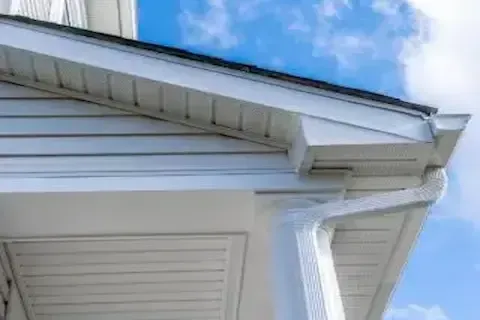
Soffit Repair After Squirrel Damage in Blaine MN Homes
Squirrels are relentless when they find a weak point along your roofline. In Blaine, MN, where mature oak and maple trees crowd close to residential neighborhoods throughout Crestwood, Lexington Reserve, and Village Creek, it takes very little time for a squirrel to convert a hairline soffit gap into a full entry point. Once inside, they chew insulation, deposit nesting material, and damage the ventilation pathway that every attic depends on. Understanding what soffit repair after squirrel damage actually involves — and why timing matters — helps you move quickly before the problem compounds.
How Squirrels Breach Soffit Panels Along Blaine Rooflines
Squirrels do not create damage randomly. They probe the roofline methodically, testing joints where the soffit panel meets the fascia board, corner returns, and the narrow gap at the rafter tail. In Blaine homes built in the late 1980s and 1990s, original vinyl soffit panels have aged to a point where UV degradation and winter contraction have loosened the channel clips. A squirrel weighing less than a pound can pry a panel free or gnaw through a weakened edge in under an hour.
The tell-tale signs include staining around a vent opening that looks darker than surrounding panels, a visible notch or ragged chew hole at a corner joint, and — most telling — fresh wood shavings on the ground beneath the eaves. Inside the attic, you may hear scratching in the early morning hours, particularly in late winter when squirrels in the northern metro are seeking dry nesting sites ahead of the first litter of the season.
What the Repair Process Actually Covers
Soffit repair after squirrel intrusion is not simply patching a hole. A thorough repair addresses four distinct tasks: removing and inspecting the compromised panels, cleaning the rafter bay cavity, replacing or reinforcing the backing structure if the squirrel accessed the rafter tail, and installing new panels with upgraded fastening so the channel cannot be pried loose again.
In many Blaine cases, the damage extends beyond one panel. Squirrels cache food and nesting debris in adjacent rafter bays, which means the contractor needs to pull several panels to fully assess scope. The fascia board itself is examined for moisture damage because chewed soffit openings allow wind-driven rain and snowmelt to saturate the wood underneath. If the fascia is soft, it requires replacement before new soffit panels are set, otherwise the new installation has no solid anchor.
Ventilation restoration is a step that sometimes gets skipped by contractors unfamiliar with building performance. Continuous soffit venting is the intake side of your attic's passive airflow system. Nesting material packed into the rafter bays blocks this intake, which can elevate attic temperatures in summer and contribute to ice dam formation in winter. A proper repair removes the debris and confirms airflow is restored across the full length of the affected section. For a complete solution, Soffit & Fascia Repair should address both the structural integrity and the ventilation function together.
Seasonal Timing Considerations for Blaine Homeowners
Blaine sits in Anoka County, where the shoulder seasons — late March through April and again in September through October — represent the highest risk window for squirrel attic entry. Squirrels are most active in nesting preparation during these periods, and the freeze-thaw cycles that characterize a Minnesota spring are simultaneously working against your roofline, expanding and contracting joints that make probing easier.
Repair work can be performed in any season, but there are practical considerations. In winter, frozen panels are brittle and require careful handling to avoid cracking adjacent sections during removal. In summer, vinyl expands and the channel fitting must account for thermal movement. Spring and fall remain the most efficient windows for this type of work because material behavior is stable and access to the roofline is straightforward without the ice risk that comes with January and February work.
If you identify damage in winter and cannot schedule an immediate repair, a temporary weatherproof patch using metal flashing or heavy-gauge hardware cloth can seal the entry point and deny re-entry while you wait for favorable conditions. This is not a permanent fix, but it stops the active intrusion and limits further interior damage.
Common Mistakes Homeowners Make After Discovering Squirrel Damage
The most frequent mistake is patching only the visible chew hole without inspecting the adjacent panels and the rafter bays behind them. Squirrels rarely use a single access point in isolation. If one bay has been accessed, the surrounding area has almost certainly been explored, and nesting debris may be present well beyond the visible breach.
A second common error is choosing a repair material that does not match the existing soffit profile. Blaine homes span multiple decades of construction and use a variety of panel widths and vent-to-solid ratios. Installing mismatched panels creates a visual inconsistency and, more importantly, can disrupt the balanced intake pattern if a vented panel is replaced with a solid one in the wrong location.
Skipping a pest management step before closing the soffit is also a significant oversight. If a squirrel is still in the rafter bay when the panels are reinstalled, you have sealed it inside. A wildlife exclusion professional should confirm the space is clear before any permanent fastening takes place. Coordination between the roofer and the wildlife contractor is worth the scheduling effort.
Why the Roofline in Blaine Specifically Warrants Attention
The mature tree canopy across established Blaine neighborhoods is a genuine asset, but it places residential rooflines in direct contact with squirrel travel corridors year-round. Overhanging branches that touch or nearly touch the roofline allow squirrels to step directly onto the soffit without any climbing effort at all. Trimming branches back to a clearance of at least eight feet from the roofline is the single most effective deterrent and should accompany any repair to reduce the probability of re-entry.
The combination of older vinyl soffit stock, a dense urban forest canopy, and hard Minnesota winters makes Blaine homes disproportionately susceptible to this type of damage compared to newer suburban developments with limited tree coverage. Routine annual inspection of the soffit and fascia condition — particularly at corners and vent strips — catches early wear before a squirrel finds it first.
What to Expect From a Professional Assessment
A qualified contractor will walk the perimeter of the home at ground level first, then access the roofline to inspect panel condition, channel integrity, and any evidence of prior pest entry. The attic interior should also be checked from above to document how far nesting material extends and whether any structural members show signs of gnawing. From that inspection, you receive a clear scope of work covering panel replacement, backing repair if needed, ventilation restoration, and recommendations on branch clearance or hardware cloth reinforcement at vulnerable corners.
Acting promptly after you notice the first signs of soffit damage protects your attic, your insulation, and the long-term performance of your roofing system. In Blaine, where squirrel pressure is consistent across all four seasons, a sealed and structurally sound soffit is one of the most practical investments a homeowner can make.
