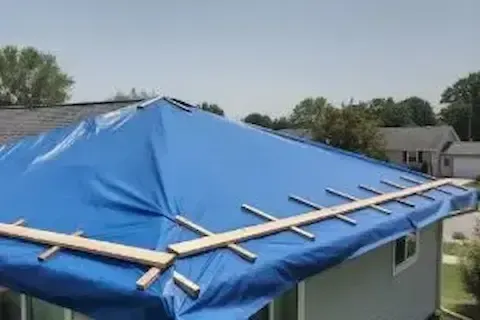
When to Call for Emergency Roof Tarping in Blaine MN
Call for emergency roof tarping in Blaine, MN any time a storm, falling tree, or sudden shingle failure exposes your roof deck or underlayment to open sky. If water is actively entering your home, if you can see daylight through the attic, or if a large section of shingles is missing after a hail or wind event, you should not wait until business hours. Delaying even a few hours in a Minnesota rain event can turn a simple repair into full deck replacement, mold remediation, and interior damage that costs many times more than the tarp call itself.
Step 1: Identify Whether the Damage Qualifies as an Emergency
Not every damaged shingle requires an emergency call. An emergency exists when the roof deck or underlayment is directly exposed to weather. Walk through your attic with a flashlight immediately after any significant storm. Signs that require same-day tarping include daylight visible through the decking, active water dripping or streaming, insulation that is wet or sagging, or a tree limb that has punctured the sheathing. In Blaine, hail events in late spring and early summer frequently strip entire shingle fields on the south- and west-facing slopes of roofs, leaving underlayment that saturates within one rain cycle. If you see any of these conditions, the damage qualifies.
Step 2: Document the Damage Before Anything Is Covered
Before the tarp goes on, photograph and video the damage from every angle you can safely access. Capture the exterior impact zone, the interior attic, and any water staining on ceiling drywall below. Blaine homeowners filing insurance claims through Anoka County adjusters consistently report faster settlements when they have timestamped photos taken before temporary repairs. Your insurance policy requires you to mitigate further damage promptly, but it also requires documentation proving the storm caused the original loss. Thirty seconds of video walk-through inside the attic is often the most compelling evidence an adjuster will receive.
Step 3: Call a Local Emergency Roofing Contractor, Not a General Handyman
Emergency roof tarping requires proper anchoring with wood stripping screwed through the tarp and into the decking or over the ridge, not sandbags or weights that shift in wind. A general handyman may lay a tarp flat, which pools water and fails within one storm. A qualified roofing contractor will run the tarp over the ridge so water sheds correctly, use 6-mil or heavier polyethylene, and secure the edges so the tarp does not become a sail in the next round of Blaine's characteristic northwest winds. Emergency Roof Tarping performed correctly should hold through multiple weather events until a full repair assessment can be completed in daylight.
Step 4: Confirm the Tarp Covers the Full Exposure Zone
Once the contractor is on-site, verify that the tarp extends at least three feet beyond the visible damage in all directions and runs over the ridge on the high side. A common failure point in emergency tarps installed under pressure is undersizing — covering only the obvious puncture or missing shingle patch without accounting for the water travel path under the felt. In older Blaine neighborhoods near Rice Creek and the 99th Avenue corridor, roofs with original 3-tab shingles from the 1980s and 1990s often have underlayment that is already brittle and will admit water two or three feet from the impact zone. An undersized tarp creates a false sense of security and allows interior damage to continue.
Step 5: Notify Your Insurance Carrier Within 24 Hours
Minnesota insurers expect prompt notice after storm damage. Call your carrier or open a claim online the same day or the morning after the event. Provide the date and type of storm, the documentation photos you took in Step 2, and the name of the contractor who installed the tarp. Most standard homeowners policies in Blaine cover emergency tarping as part of the covered loss, meaning the cost is typically folded into your claim rather than paid out of pocket. Keep the invoice from the tarping company because adjusters will want it as a line item. For more guidance on the full repair process, visit the resource page for Blaine homeowners navigating storm damage.
Step 6: Schedule a Full Damage Assessment as Soon as Weather Clears
A tarp is a temporary measure, not a repair. Once conditions allow safe roof access, schedule a comprehensive inspection that covers the entire roof surface, not just the area under the tarp. In Minnesota, the freeze-thaw cycle can begin pushing water into any undetected micro-crack within weeks of an initial storm event. Blaine's climate typically gives homeowners a narrow window between late summer storms and the first hard frost in October to complete permanent repairs before winter weather compounds the damage. Use the time the tarp buys you to get multiple contractor quotes and review your insurance settlement before authorizing final repair work.
